The Mentors of the Future are In Books
The mentors of the future are in books—but not all books are written by mentors. That decision is made by the reader.
Some of the most influential mentors in my life are no longer alive. Yet I still consider them mentors because I can return to their thinking at any time. All I need to do is open the book again and allow their ideas to shape my perspective. Two enduring examples for me are The 7 Habits of Highly Effective People by Stephen R. Covey and The 12 Miracles of Life by Napoleon Hill.
I read nonfiction for learning and personal growth, and fiction—mainly fantasy—for relaxation and reflection. Over time, I’ve developed a deliberate rhythm. Fiction is always a hard copy and part of my evening wind-down routine after journaling. Nonfiction is often consumed as an audiobook, and if a book resonates deeply, I buy the physical copy to add to my library for reference and re-reading.
I love reading nonfiction and always look forward to learning something new, but more importantly, to using what I learn. I make a point of extracting at least one idea to apply before moving on to the next book.
Most people retain only a small fraction of what they read in a nonfiction book—often around 10%. Not because the ideas aren’t good, but because information alone doesn’t change behaviour. A first read rarely creates mastery. It introduces language, shapes thinking, and surfaces one or two ideas that feel relevant at that moment. Real learning happens through repetition, reflection, and application.
Leaders who get results don’t try to remember everything. They extract the few ideas that matter and use them deliberately.
A mentor once told me that if you can take just one idea from an experience, it has been worth your time. I’ve carried that principle with me for years. When I finish a book, I consciously ask: What is the one thing I’m taking this time?
Last year, I read more than 30 books, both fiction and nonfiction. Each serves a different purpose. Fiction shapes identity, belief, and meaning through story and metaphor. It influences how we see ourselves and the world. Nonfiction provides language, frameworks, and structure for action. One changes perspective, the other changes behaviour.
Leaders who grow fastest don’t choose between the two. They use fiction to deepen their thinking (or simply to pause and reflect) and nonfiction to build discipline, clarity, and execution.
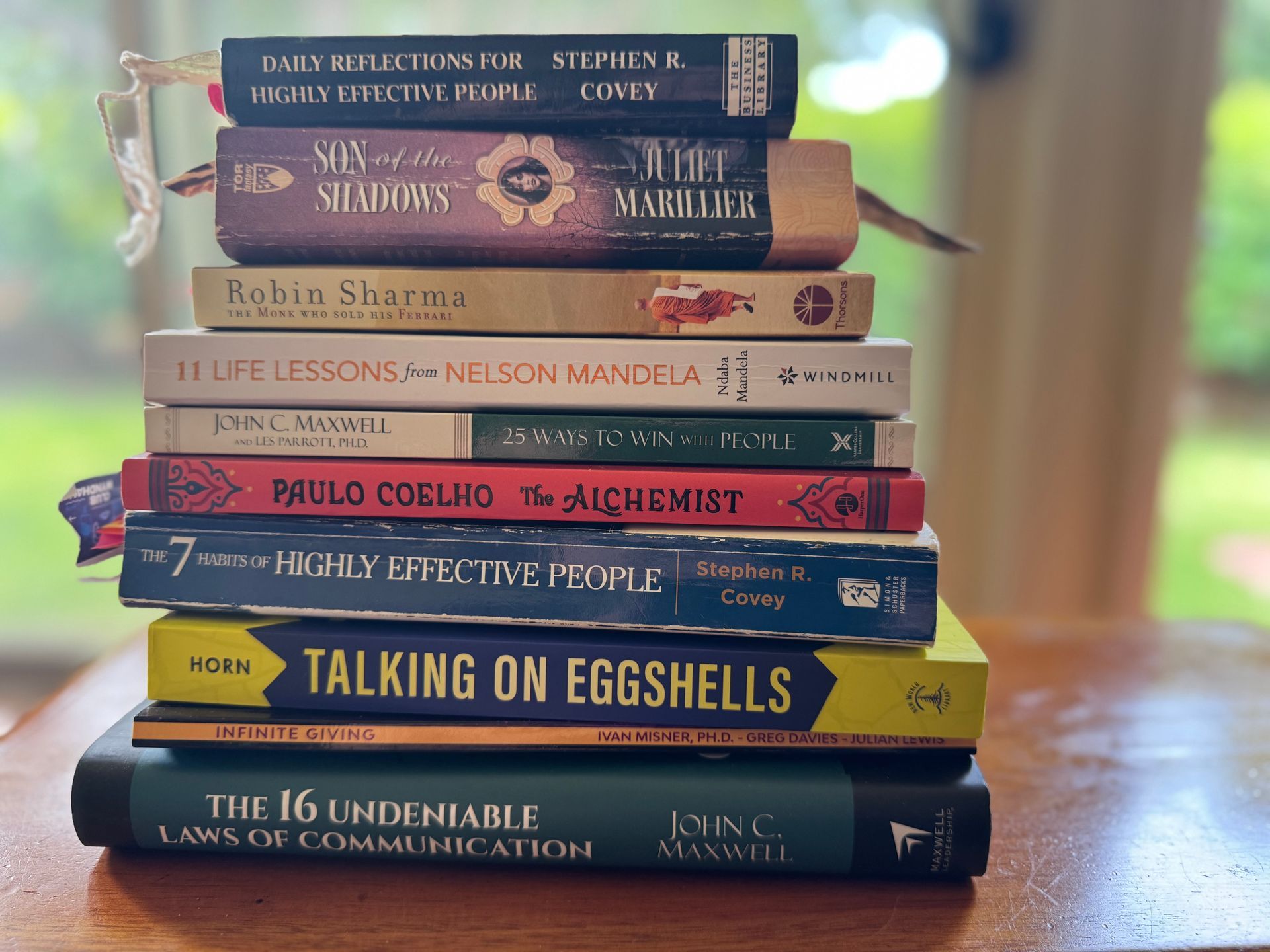
Below are ten books I read in 2025 that influenced my learning. They are not necessarily my favourites, but they are among the ones that have stayed with me. I hope they inspire you to read with greater intention.
Read more here, starting with 25 Ways to Win with People – John C. Maxwell
Search Blog
Recent Posts